Economic impact assessment of a proposed investment in a new aluminium product finishing-line
Background and context
Hulamin is an aluminium semi-fabricator based in Pietermaritzburg, South Africa, supplying a wide range of high-quality aluminium products to customers across Africa and international markets.
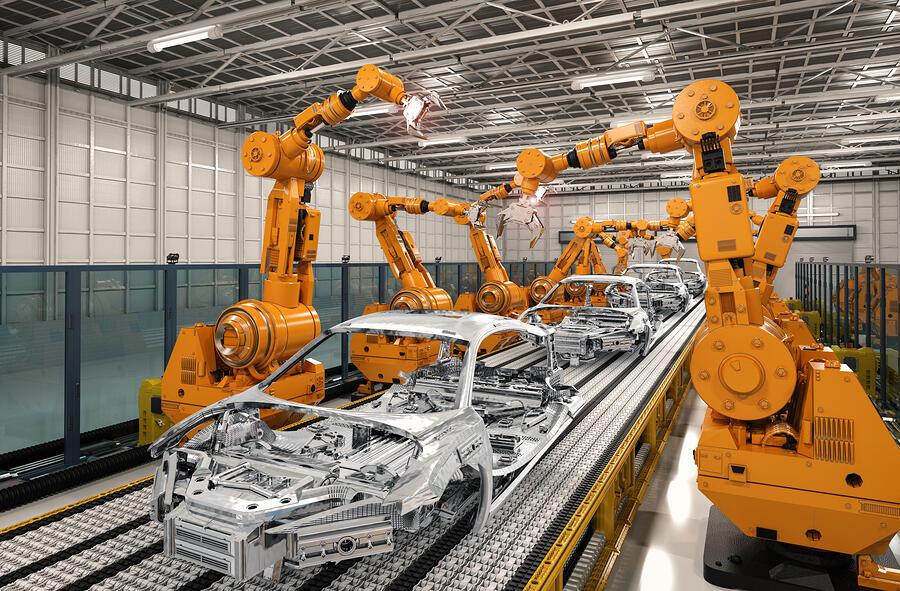
At the time of the study, Hulamin was considering an investment in a new product finishing line that would enable a new subsidiary to produce automotive body sheet (ABS) coils. ABS coil is an automotive-grade aluminium product increasingly used by original equipment manufacturers (OEMs) for exterior vehicle panels, such as doors and roofs, as a substitute for advanced high-strength steel (AHSS).
Aluminium offers several advantages over traditional steel, including significantly lower weight while maintaining the tensile strength and ductility required for vehicle bodies and exterior panels. Global automotive manufacturers were facing increasing pressure to reduce vehicle weight in order to improve fuel efficiency, enhance performance, and reduce CO₂ emissions. This trend towards vehicle “light-weighting” was a key driver of growing demand for ABS coil.
At the time, the automotive market had become the fastest-growing segment of the global aluminium industry, with aluminium use in vehicles expected to increase by around 30 per cent annually over the decade to 2026. Adoption was particularly pronounced in higher-end passenger vehicles and heavier vehicle segments, such as pick-ups and SUVs, including models such as the Mercedes-Benz W205 C-Class, which in 2014 became the first vehicle manufactured in South Africa using aluminium body panels.
Purpose of the engagement
The purpose of the engagement was to assess and, where possible, quantify the economic impact of Hulamin’s proposed investment in an ABS coil finishing line on the broader South African economy. Specifically, the study sought to:
– Assess the gross contribution of the investment through direct, indirect and induced effects on:
- Employment
- Gross domestic product (GDP)
- Labour remuneration
- Tax revenues
– Identify upstream and downstream industries that were likely to benefit from the project, as well as the potential for import displacement and additional exports.
– Illustrate how the investment could deepen localisation within South Africa’s automotive and aluminium value chains and enhance the competitiveness of these manufacturing industries.
Our approach
The assessment combined qualitative value-chain analysis with a quantitative economic impact assessment.
- Value-chain assessment: The study began with a detailed mapping of the aluminium and automotive manufacturing value chains. This analysis examined how the proposed ABS finishing line would alter existing value-chain linkages and support the development of both upstream suppliers and downstream manufacturing activities.
- Economic impact assessment: A quantitative assessment was undertaken to estimate the macroeconomic impacts associated with both the capital investment in the new finishing line and its ongoing operational expenditure. The analysis employed a 171-sector social accounting matrix (SAM) for South Africa. A SAM is a static economy-wide model that captures the interactions between production sectors, households, government and factors of production. It enables the estimation of economy-wide impacts arising from an exogenous expenditure shock, such as increased demand for a particular sector’s output, on indicators including GDP, employment, government revenue and the trade balance. The model was used to identify which industries would benefit from the investment and operations of the ABS line, and the extent to which expenditure would be retained within the local economy..
Key findings
The value-chain assessment indicated that the proposed ABS finishing line would strengthen the competitiveness of South Africa’s aluminium semi-fabrication and automotive manufacturing industries. The investment was expected to deepen localisation, reduce reliance on imported aluminium products, and improve the country’s trade balance through increased exports.
The macroeconomic impact assessment showed that, during the construction phase, a significant share of the investment expenditure would leak out of the local economy due to imported equipment and inputs. However, the portion of spending retained domestically was found to more than double over a two-year period as indirect and induced effects materialised, resulting in the creation of approximately 855 full-time-equivalent formal jobs. The construction phase was also associated with increased tax revenues arising from higher levels of economic activity.
During the operational phase, the analysis found that the full value of annual operating expenditure would accrue to the local economy. The primary beneficiaries were firms supplying inputs to the ABS line, with notable spill-over benefits to supporting sectors such as transport, electricity distribution and other business services.

Client
Hulamin
Date Completed
2017
Author(s)
- Kay Walsh
Related Work
Related Links